Confirm the host and listing trail
A shortlet booking moves faster than a rental, but the same safety logic applies: confirm the person, the place and the payment path. Start by checking the host or agent profile, business name, public reviews, social presence, phone number and whether the same apartment appears consistently across platforms.
Search the host, apartment name, estate name or company name with words like review, complaint or scam. Consumer-safety guidance for rentals consistently warns that fake listings may use real photos, copied descriptions or pressure tactics to collect money before guests realise the place is unavailable or does not exist.
- Host or company name and phone number.
- Public profile, reviews or verifiable business presence.
- Exact apartment, building, estate or street area.
- Recent photos or a short walkthrough video.
- A written booking confirmation with dates and amount.
Match the apartment to the photos
Ask whether the photos show the exact apartment or only a similar unit. For serviced buildings, confirm the floor, room count, bed sizes, bathrooms, balcony, kitchen, parking and shared facilities. If the host sends a video, ask them to show a current date marker or a specific feature from the listing.
Be careful with listings that use only glossy close-ups, no exterior, no bathroom photos, no kitchen photos or no view of access areas. A beautiful living-room photo is not enough to judge a stay.
- Bedrooms, bathrooms and bed sizes.
- Kitchen access and included appliances.
- Parking and estate entry process.
- Wi-Fi, smart TV, AC, inverter, generator or prepaid meter.
- Lift availability and backup stairs if in a high-rise.
- Whether photos are current and from the exact unit.
Clarify the full price and house rules
Shortlet misunderstandings usually come from missing terms. Confirm nightly rate, cleaning fee, caution deposit, extra guest charge, security deposit, check-in time, check-out time, late checkout fee, party rules, smoking rules, pet rules, cooking rules and refund terms.
Ask what happens if power, water, internet, AC or access fails during the stay. For longer stays, ask about cleaning schedule, linen changes, maintenance response time and who enters the apartment while you are there.
- Total amount due before check-in and balance if any.
- Caution deposit amount and refund timeline.
- Number of guests allowed and visitor rules.
- Check-in, checkout and late checkout fees.
- Power, water, internet and maintenance response.
- Cancellation and refund rules.
A deposit is not the problem. An unclear deposit is. Get refund conditions in writing before you pay.
Use a traceable payment path
Pay through a trusted booking platform where possible. If you are paying a host or company directly, the account name should match the host, company or agreement. Keep the receipt, booking confirmation, chat history and proof of amount paid.
Avoid unusual payment pressure. Consumer.gov warns against landlords who only accept cash, gift cards, cryptocurrency or wire transfer, and FTC travel-scam guidance makes the same point for travel deals: irreversible payment methods are a major scam signal.
- Use platform checkout when available.
- Pay into a named account connected to the host or company.
- Avoid gift cards, crypto, wire transfer pressure or unrelated accounts.
- Keep proof of payment and written confirmation of dates.
- Do not pay full cost if basic host, address or availability details are missing.
Plan arrival before you leave home
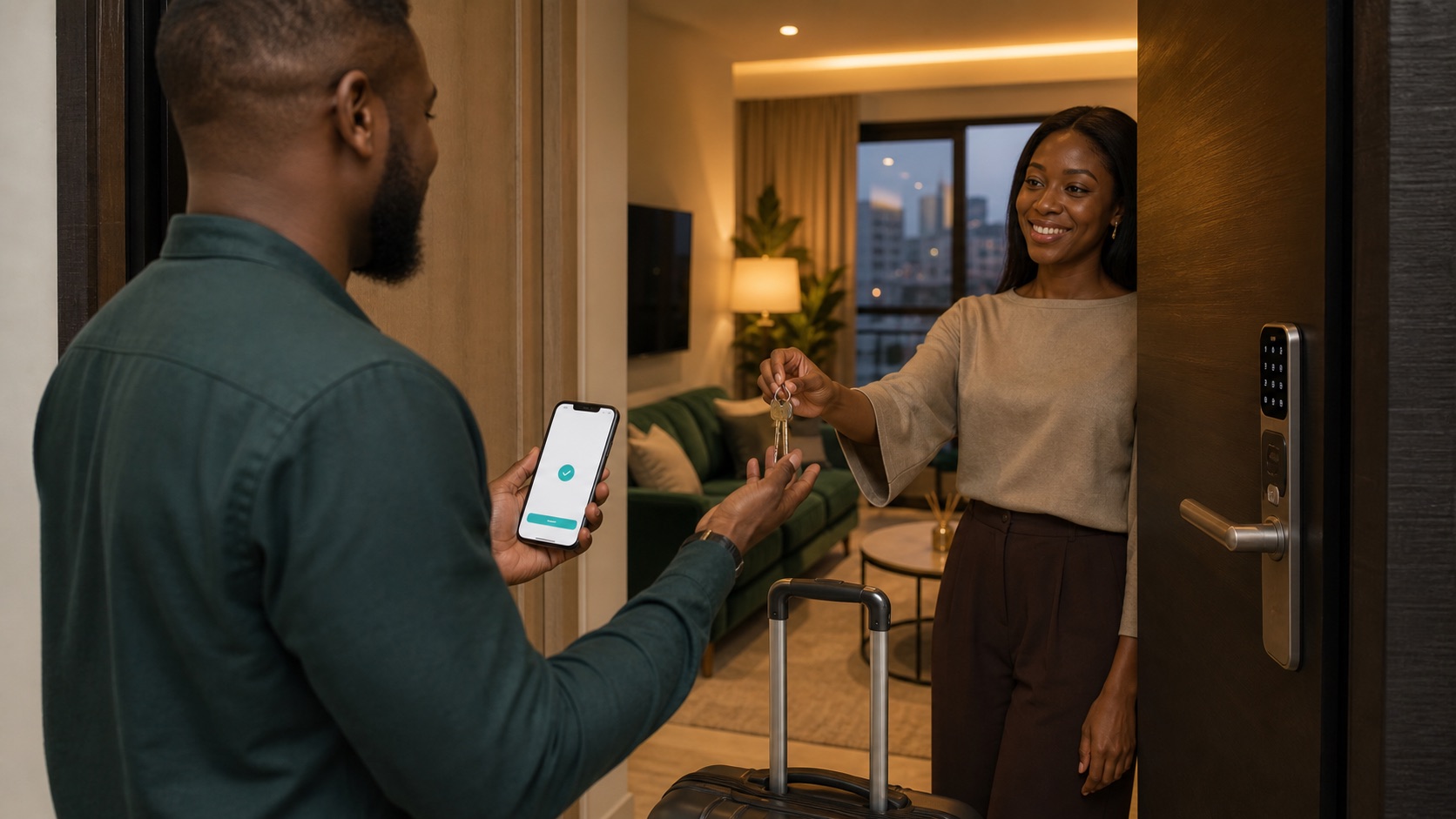
A safe shortlet booking includes an arrival plan. Before travel, confirm the check-in address format, gate access, security instructions, parking, person handing over the keys, backup phone number, Wi-Fi details and what to do if you arrive late.
If the building is in a gated estate, ask whether visitors need names at the gate and whether ride-hailing drivers are allowed in. If you are arriving at night, confirm lighting, access and support before you get there.
- Exact check-in address or estate gate instructions.
- Host, caretaker or security contact.
- Backup number if the primary phone is off.
- Parking and visitor registration.
- Access cards, codes or key pickup process.
- What happens if the apartment is not ready.
Check safety and privacy on entry
At check-in, inspect the apartment before settling in. Check locks, windows, balcony doors, smoke or gas concerns, exposed wiring, bathroom drainage, bed condition, AC, power backup and whether any maintenance person needs access during your stay.
Take short photos or videos of the apartment condition at arrival, especially if a caution deposit is involved. Share concerns with the host immediately and keep the conversation in writing.
- Door locks, window locks and balcony safety.
- Gas cylinder, cooker, exposed wires and water leaks.
- Cleanliness of bedding, bathrooms and kitchen.
- Internet, AC, TV, water and backup power working.
- Privacy expectations and who has spare keys.
Keep evidence for refunds or disputes
If the host changes the apartment, cancels, withholds deposit or delivers a materially different stay, your evidence matters. Keep screenshots, payment proof, booking confirmation, arrival photos, checkout photos and written records of complaints.
For platform bookings, report the issue through the platform promptly. For direct bookings, ask for a written refund timeline and keep communication calm, specific and documented.
- Original listing photos and description.
- Payment receipt and booking confirmation.
- Check-in and checkout condition photos.
- Screenshots of rules, refund terms and host promises.
- Timeline of any issue and host response.
Red flags before booking a shortlet
Shortlet scams rely on speed: last-minute travel, event weekends, urgent discounts and fear of losing the apartment. You can still move fast without skipping basic checks.
- Host refuses recent photos, video or exact location context.
- Only irreversible payment methods are accepted.
- Price is far below similar apartments in the area.
- Host pushes you away from the platform where you found the listing.
- No written refund, caution deposit or house rules.
- Address is vague until after full payment.
- Photos appear on multiple listings with different host names.
Common questions
Should I pay a caution deposit?
Caution deposits are common, but the amount, deductions and refund timeline should be written clearly before you pay.
What if the host changes the apartment?
Ask for photos, location and written terms for the replacement before accepting. If it is materially worse, request a refund or platform support.
Is paying outside a booking platform safe?
It carries more risk. If you pay directly, make sure the host or company is verified, the account name matches, and all booking terms are written.
What should I do at check-in?
Inspect the apartment, test key amenities, confirm locks and access, take condition photos, and report any issue immediately in writing.